

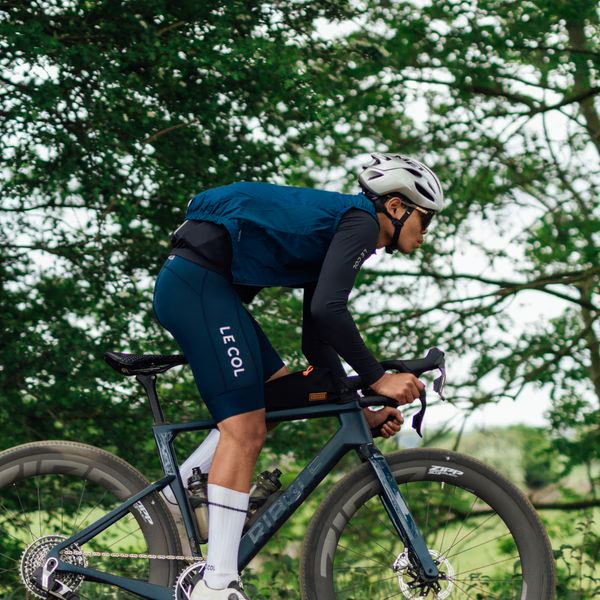
More riders are choosing gravel bikes because they don’t want to be boxed in. They want quieter roads. More adventure. More choice. One minute you’re rolling on smooth asphalt, the next you’re bouncing along a towpath or forest track. No need to turn back. No need to switch bikes.If you’ve ever wondered what consitutes a gravel bike, what makes it different or whether it’s right for you, you’re in the right place. This guide breaks it all down. No jargon. No hype. Just straight-up answers, rider to rider.If you want to dive straight into options, you can explore our Gravel range here.
What is a Gravel Bike?
A gravel bike is built to tackle mixed terrain. That means road, dirt, trails, towpaths, forest tracks and everything in between. The similarities to a road bike are obvious. The same drop handlebars, lightweight frame and big wheels. But it’s been toughened up and relaxed where it matters. The frame is designed to be stable and comfortable, not twitchy or aggressive. You sit slightly more upright, which takes pressure off your back and shoulders. It’s still quick, but also forgiving. Perfect for long rides and uneven terrain.Gravel bikes run wider tyres than road bikes. Those tyres add grip and cushion, so loose gravel, sand and mud don’t send you sliding. The frame and fork offer more clearance too, so dirt and debris don’t clog things up.They’re also built for real-world riding. You’ll typically find extra mounting points for bottles, bags, racks and mudguards. That makes them ideal for commuting, bikepacking, touring or long weekends off the beaten path.The biggest difference, though, is how a gravel bike makes you feel. You stop worrying about the surface. You stop planning perfectly smooth routes. If a path looks interesting, you take it. That freedom is the heart of gravel riding. It’s why so many riders are switching from pure road or mountain bikes to one bike that can do it all.It’s literally as simple as that. The gravel bike is a road bike’s tougher, more adventurous cousin.


Gravel vs road vs mountain – what’s the difference?
If you’re weighing up a gravel bike vs road bike, or wondering how either compares to a mountain bike, it really comes down to three things. Geometry, tyres and intent.A road bike is built for speed on smooth tarmac. The riding position is more aggressive, the tyres narrow and slick. It’s perfect for long road miles and fast group rides. But deviate from smooth asphalt and things get shaky, fast.A mountain bike is built for serious off-road terrain. Think steep climbs, rocky descents, roots and drops. You’ve got flat bars, big knobbly tyres and suspension. It’s brilliant in the rough. But on the road, it feels slow and cumbersome.A gravel bike sits between the two.Gravel bike geometry offers more stability than a pure road bike, thanks to a longer wheelbase. The head angle is more relaxed, keeping you steady on loose terrain. This is what people mean when they talk about gravel geometry. It’s designed to feel confident, not nervous.The tyres are wider than a road bike’s but usually narrower than a mountain bike’s. That gives you grip and comfort without sacrificing too much speed.The gearing is tuned for mixed terrain too. You get low gears for climbs on loose ground but still have enough top end for fast sections on the road.In short…Road bike = fast on smooth roads Mountain bike = tough on extreme trails Gravel bike = capable on bothIf you want a deeper breakdown, check out our guide on endurance bikes vs all-road bikes vs gravel bikes.


Why gravel bikes have become so popular
Gravel riding isn’t just a trend. It’s a shift in how people want to ride. Riders are moving away from traffic-heavy main roads and are looking for quieter lanes, tracks, bridleways and hidden routes. Gravel bikes unlock all of that. You can link surfaces, create your own loops and turn an ordinary ride into an epic adventure.There’s also the rise of bikepacking and long-distance exploring. Load your bike with bags, pick a route and head out for the weekend. No car. No schedule. Just you, the bike and the path ahead. It’s not about racing. It’s about the experience.Gravel riding attracts a different kind of mindset too. It’s welcoming. Inclusive. No pressure to hit certain speeds or numbers. You ride your way at your own pace.Groups like the Ribble Outliers have helped build that community feel. Riders coming together to explore new routes, share stories and escape the usual road racing scene. Gravel brings people back to the simple joy of cycling.And for beginners, it’s one of the best ways into the sport. Which leads to a common question…Is a gravel bike good for beginners?Absolutely. A gravel bike is one of the easiest, most confidence-inspiring ways to start cycling. It’s stable, comfortable and adaptable. You’re not locked into one type of riding. You get to experiment and find what you enjoy.That’s a big reason the demand for the best gravel bike for beginners keeps growing.
Key features that define a gravel bike
There are a few features that really make a gravel bike stand out. These are the things that turn a normal ride into a proper all-terrain experience.Frame and fork materialsGravel bikes come in a choice of materials, each offering its own distinctive ride feel.
- Aluminium is strong, lightweight and great value. Perfect for riders who want performance without a premium price tag.
- Carbon is lighter and smoother over rough surfaces. It can be shaped to dampen vibration and boost efficiency.
- Steel is known for comfort and long-term durability. It’s a favourite for bikepacking and long adventures.
- Titanium is ultra durable, corrosion-resistant and incredibly smooth to ride. Built for a lifetime of use.
- Longer wheelbase
- More relaxed head angle
- Slightly higher front end
- Smoother tread for fast, hard-packed surfaces and roads.
- Chunkier tread for loose gravel, mud and rough trails.


Is a gravel bike right for you?
This is the big one. If you’re still asking is gravel riding suitable for beginners, here’s the honest truth. Gravel riding is just riding, without the rules.A gravel bike could be right for you if:
- You’re a commuter who wants comfort, durability and the option to take a scenic route home.
- You’re a road cyclist who wants to explore beyond smooth tarmac.
- You’re a weekend adventurer looking for new routes and quieter paths.
- You want one bike that can handle road, trail and everything in between.
- You don’t want to be boxed into one type of cycling.